Younju - Introduction
This photo essay developed from an afternoon spent with my dear friend Younju, whom I met during my time in Paris. It explores her ways of seeing herself, shaped by the complex relationship she has with her appearance and body.
Younju chose to be photographed in the spaces where she feels most at ease and yet often most vulnerable: her home, particularly in front of the bathroom mirror, where she faces herself every morning. She wanted the photoshoot to center around her insecurities. But what I saw - both behind the camera that day and whenever we spend time together - were her strength, boldness, and authenticity.
This series hopes to create a loving spotlight within an environment that relentlessly seeks to regulate women’s* bodies and behavior - prescribing how they should look, act and present.
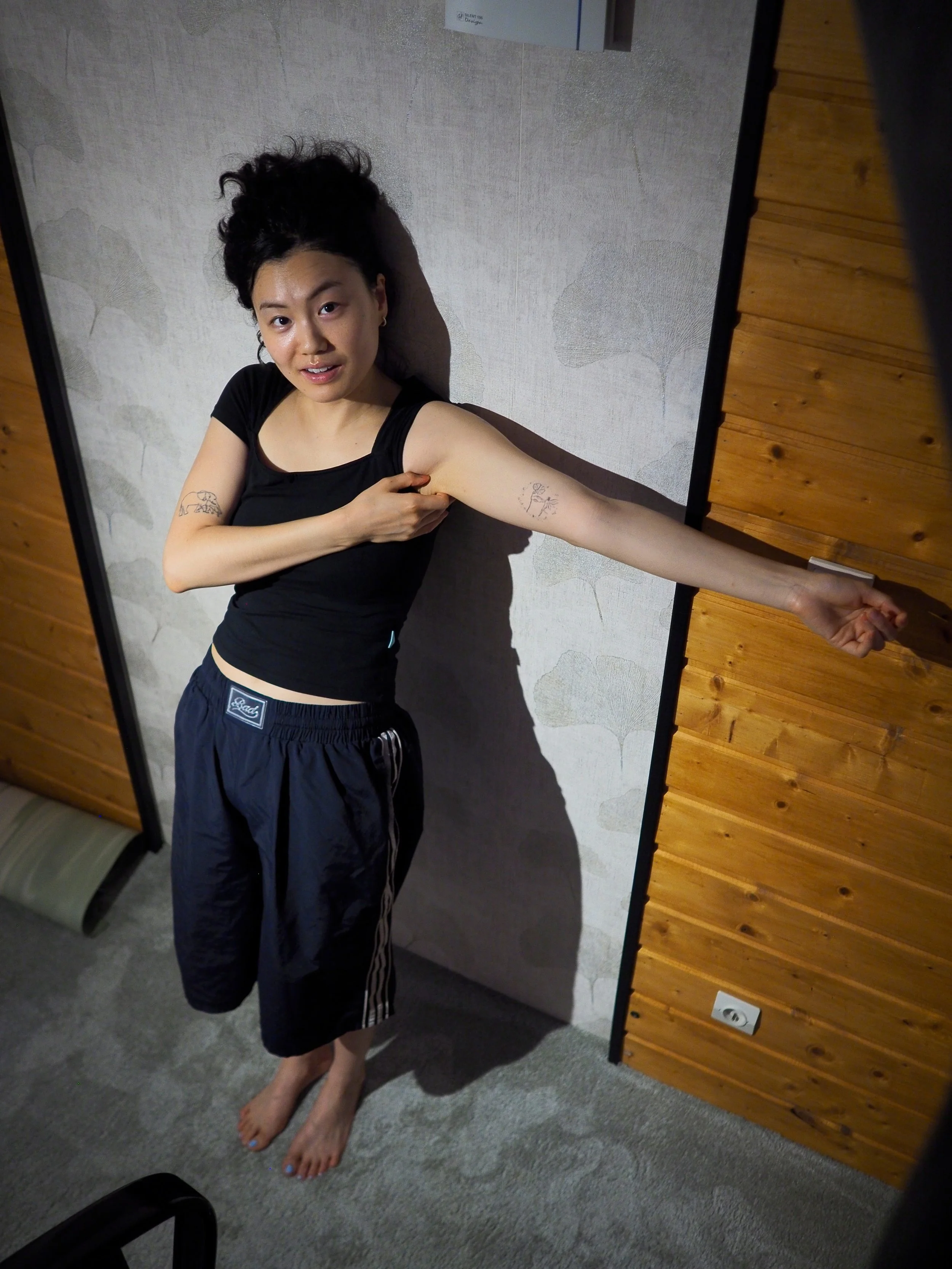
Younju shares how, growing up in South Korea, beauty ideals regarding hair, weight, skin, facial form permeated her self-perception from an early age.
These ideals are dictated by a capitalistic beauty industry heavily influenced by Western beauty standards.
Over time, they became internalized, altering how she moved through the world and how she regarded her own reflection.
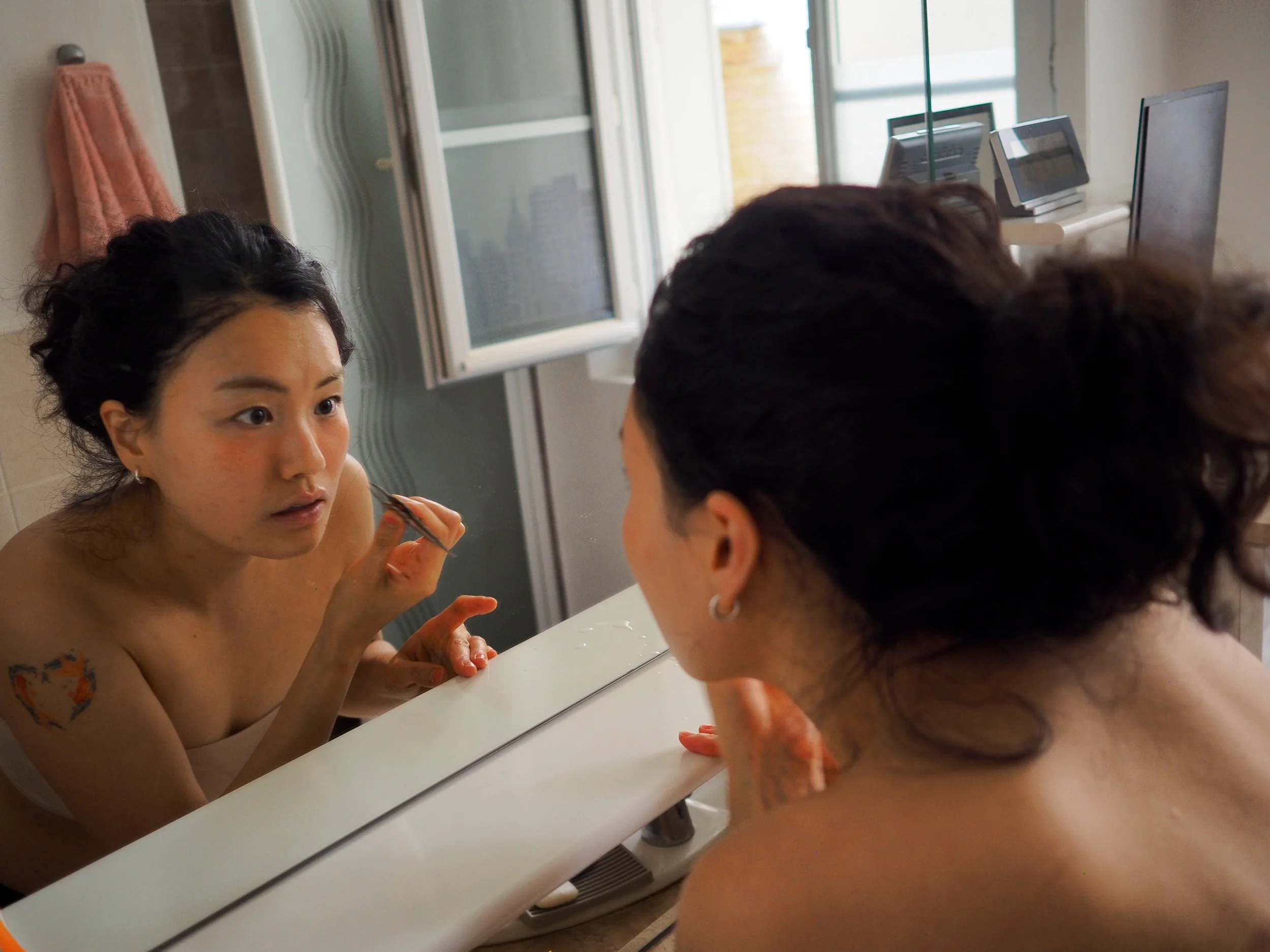
Younju says she still feels those pressures today, but with more distance.
Slowly nurturing a new relationship with her body and appearance, practices such as makeup and skincare are becoming less about correction and more about self-care and playful self-expression. “Recently I’ve been into highlighter,” she says.
While I’m working on my camera settings, Younju starts absent-mindedly examining her body hair.
She says: “When I was 13, my body hair started showing more visibly. Since my mom has the most body hair in our family, I blamed her, telling her that it was her fault.
My mom replied with, ‘I’m sorry, darling.’”
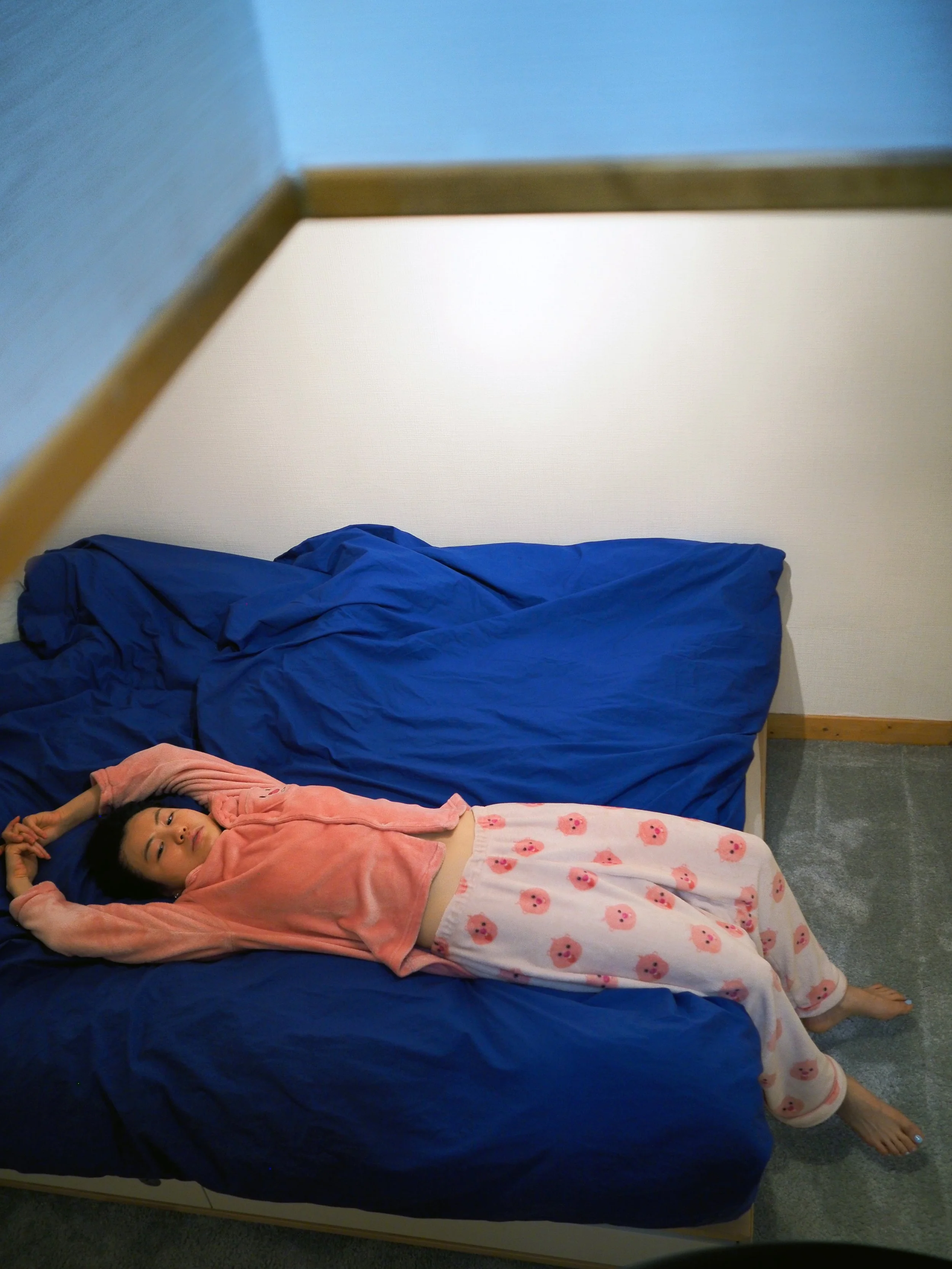
The project interrogates the function of a mirror in a society shaped by capitalist, partriarchal, racist and ageist beauty standards.
An object we use to look at ourselves - yet, what we see or don’t see is often a reflection of ideals we’ve absorbed and images we've seen before - distorting and directing our gaze until we mistake it as our own.
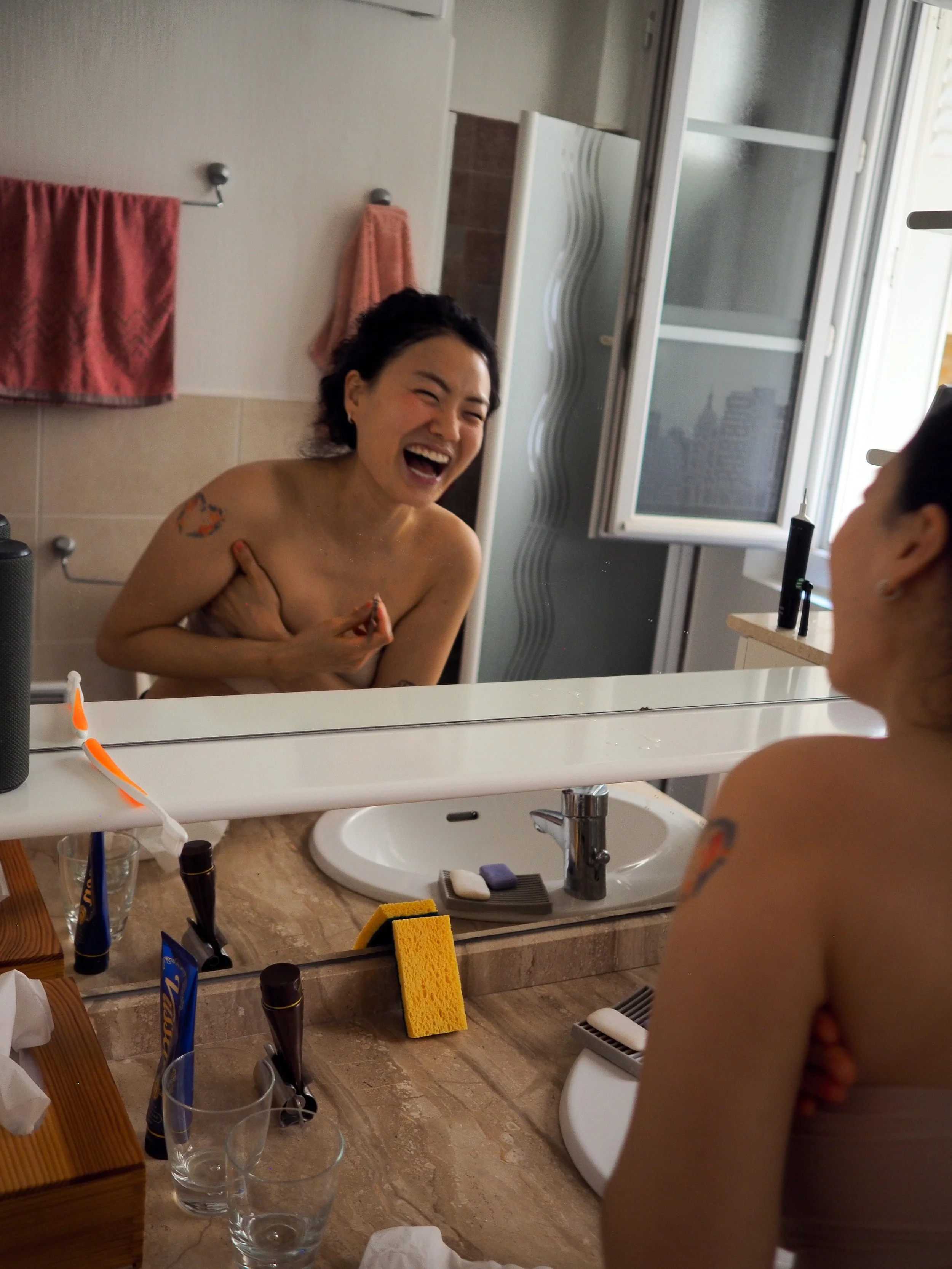
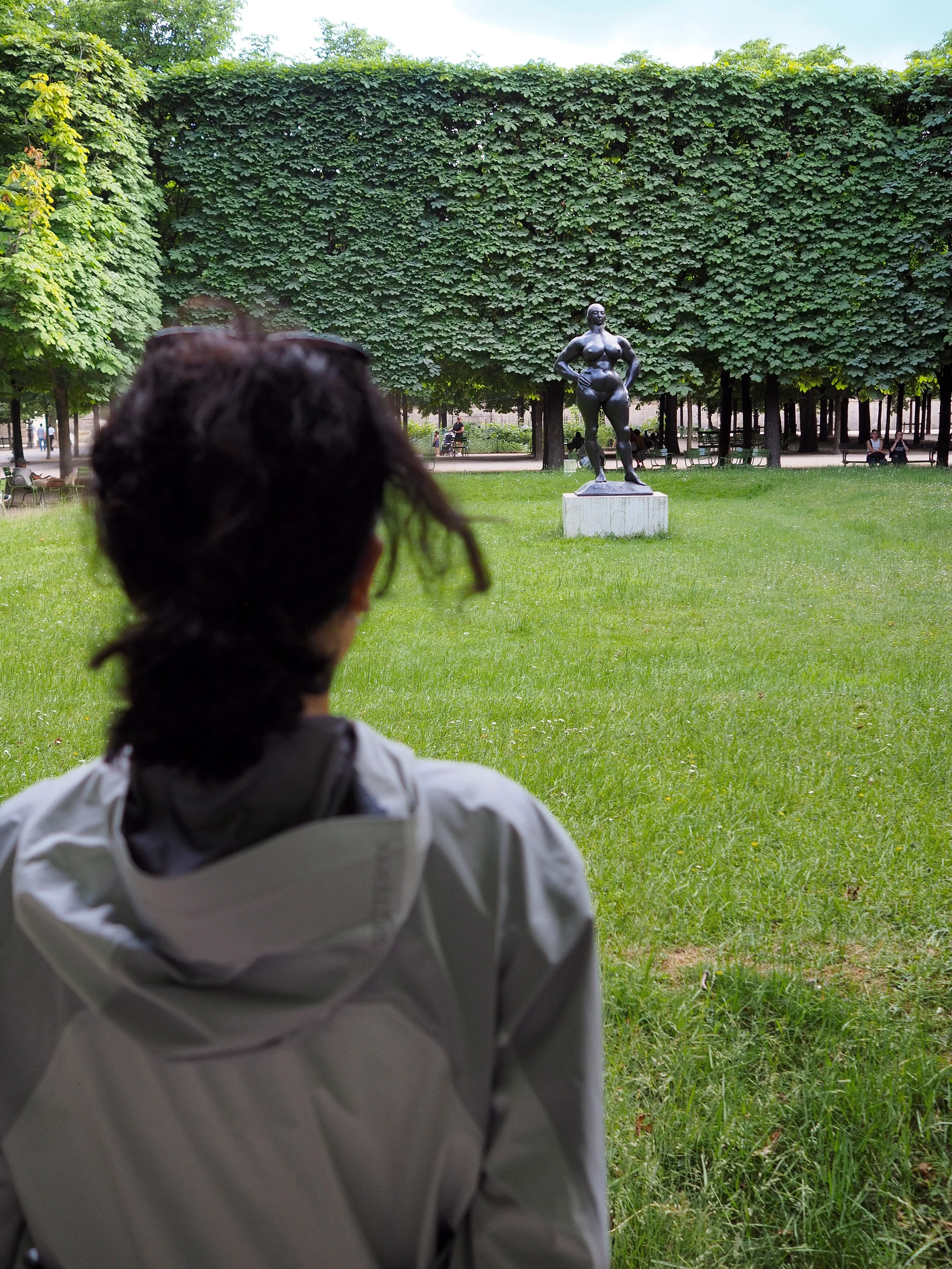
Towards the end of our shooting, Younju wants to walk to Jardin des Tuileries to take a portrait with The Standing Woman - a sculpture built in the 1930s.
She describes how from the first time she saw her, she was drawn in by the strength and confidence conveyed by the figure.
“I’m a bit nervous,” she says before we arrive. “I’m gonna finally meet her again. My strong lady.”